RMNEF Newsletter October 2026
News and Noteworthy
Preparing for a World of Adventure
We were delighted to receive an update from one of our young beneficiaries who is fundraising to attend the World Scout Jamboree in Poland, with the RMNEF contributing to the cost, alongside the funds she is raising herself.
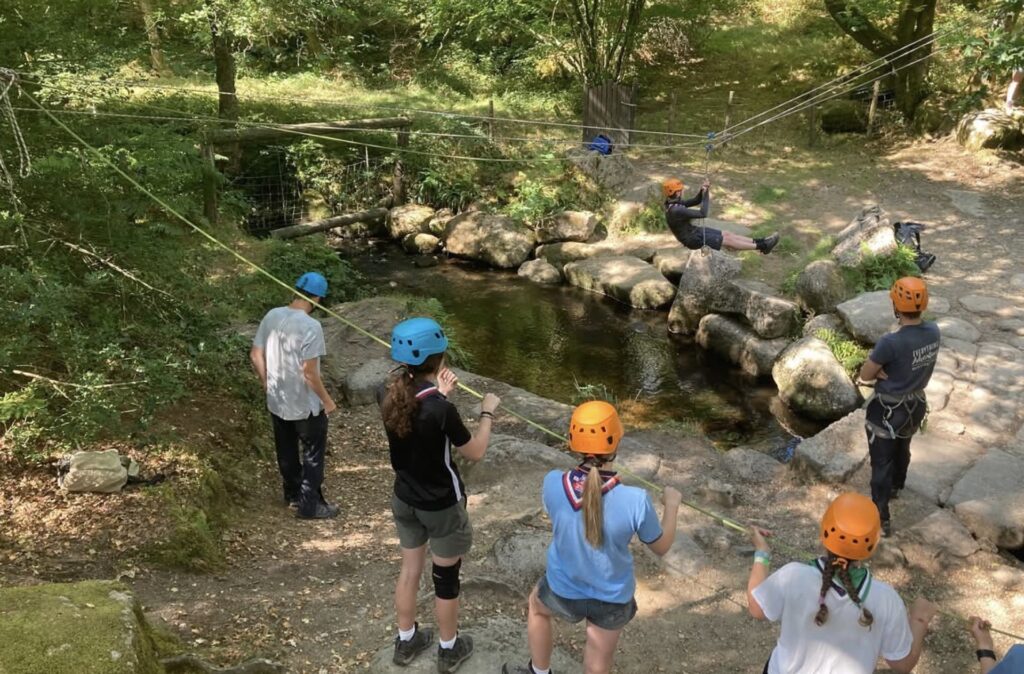
Following a successful fundraiser at a local environmental event, she is now preparing for another at a local food festival. She has also attended a training camp with Scouts and Explorers from across Devon, taking part in team-building, cooking and problem-solving challenges.
Education extends far beyond the classroom, and the Jamboree will offer a wonderful opportunity to develop independence, confidence, teamwork and resilience, while learning alongside young people from around the world. It is fantastic to see her working so hard towards this experience, and we are pleased to support her along the way.
From Sea to School
This October, the Fishermen’s Mission is giving primary schools a new way to explore the UK’s fishing industry through free curriculum-linked resources for KS1 and KS2 pupils.
Created as part of its annual Big Dip campaign, the resources introduce children to fishing history and heritage, life at sea, food chains, fish identification, boats, UK ports and even sea shanties.
For the RMNEF, it is particularly lovely to see the lives and work of fishing families being brought into the classroom. We support the children and young people of professional sea-going fishermen, and initiatives such as this can help younger generations understand more about the skills, commitment and heritage behind the industry.
Schools can also choose to take part in the Big Dip fundraising challenge, with money raised supporting the Fishermen’s Mission’s wider work helping fishermen and their families during times of hardship. Taking part in the fundraising is entirely optional, schools can simply register to receive the free educational resources. Click here for more information.
Helping Seafarers Understand Their Rights
The Merchant Navy Welfare Board (MNWB) has launched a new practical guide designed to make it easier for seafarers to understand the rights and protections available to them at sea.
The guide explains the Maritime Labour Convention (MLC), 2006 in accessible terms and covers important areas including employment conditions, wages, accommodation, medical care, welfare support and repatriation. It has been produced in consultation with organisations including Nautilus International, the UK Chamber of Shipping, the Maritime and Coastguard Agency and RMT.
For seafarers spending long periods away from home and their families, having clear and accessible information about their rights is incredibly important. We are pleased to see another practical resource being made available to support the wider Merchant Navy community.
The guide is available through the Merchant Navy Welfare Board website.
Spotlight
Learning is Everywhere
When we think about education, it is easy to think about lessons, homework and exams. But learning doesn’t begin and end at the school gates.
A child’s interests can be sparked in all sorts of ways, through a book, a museum visit, learning to swim, joining a club, trying photography, cooking a meal, exploring the coast or simply having the right laptop to research a subject that interests them.
Enrichment is about giving young people opportunities to discover, explore and learn beyond their everyday lessons.
The Little Things Can Make a Big Difference
The importance of enrichment is increasingly being recognised. In September, the Government announced £22.5 million of investment to help more than 400 secondary schools in disadvantaged communities expand opportunities beyond the classroom.
At the RMNEF, we know that enriching a child’s education doesn’t necessarily require a grand gesture.
Sometimes it can be something relatively simple.
A laptop can allow a child to research, complete homework and explore subjects independently.
A few carefully chosen books can encourage a reluctant reader or allow a young person to delve deeper into something they are passionate about.
Art materials, a calculator, science equipment or other learning resources can give a child the tools they need to participate fully or develop a new interest.
Swimming lessons, music, sport or a school club can build confidence and introduce skills that last well beyond school.
And sometimes it is an experience, a school trip, residential, Scout or Guide activity, museum visit or educational workshop that opens a young person’s eyes to something completely new.

Learning Doesn’t Always Have to Cost
There are also many opportunities families can explore for little or no cost.
When did you last visit your local library? As well as borrowing books, many libraries offer e-books and audiobooks, computers and internet access, study spaces, children’s activities and online learning resources.
Look locally too. Museums, galleries, nature reserves, community groups and local events can provide opportunities to discover new interests.
A walk on the beach can become a lesson in marine life. Cooking together involves maths, reading and practical skills. Gardening can introduce science and nature. Even planning a journey or a day out can develop independence, budgeting and problem-solving.
Sometimes enrichment is simply about looking at an everyday activity differently.
What Could Spark Their Interest?
Every child is different.
One may love reading; another may struggle to sit with a book but become completely absorbed in building something. One might thrive on a sports field, while another discovers confidence through art, music, coding, cooking or being outdoors.
The important thing is giving young people opportunities to find what engages them.
For one young person that might be the chance to attend an international Scout Jamboree. For another it could be their first laptop, a set of revision guides, swimming lessons, art materials or the books that introduce them to a future career.
Where RMNEF Can Help
For families from eligible seafaring backgrounds who are experiencing financial difficulty, the cost of even relatively small educational items and opportunities can become a barrier.
Where there is a clear educational need, the RMNEF can consider support towards things such as:
• laptops and digital equipment
• books and learning materials
• educational equipment and resources
• tutoring and additional learning support
• swimming, music and school clubs
• educational trips and visits
• uniform and essential school items
• transport connected with education
• other educational opportunities considered on an individual basis
We always encourage families to talk to us. If there is something that would genuinely help your child learn, participate or develop their interests, but you are struggling to afford it, it may be worth asking whether we can help.
And remember, please contact us before purchasing an item or committing to a cost, as RMNEF cannot backdate grants or reimburse costs already incurred.
Think Outside the Classroom
Education isn’t only about achieving a grade.
It is also about discovering what interests you, developing confidence, trying something new and having the tools and opportunities to reach your potential.
Sometimes that takes a significant amount of support. Sometimes it starts with something as simple as a library card, a book or the right piece of equipment.
Learning really is everywhere.
Dates for the Diary
- 5–11 October – The Fishermen’s Mission Big Dip
- 5–11 October – Dyslexia Awareness Week
- 10 October – World Mental Health Day
- 14 October – Annual National Service for Seafarers
- 29 October – SeaFit, Shoreham
